The Reconstruction of Religious Thought in Islam (1930) is Muhammad Iqbal’s major philosophic work: a series of profound reflections on the perennial conflict among science, religion, and philosophy, culminating in new visions of the unity of human knowledge, of the human spirit, and of God. Iqbal’s thought contributed significantly to the establishment of Pakistan, to the religious and political ideals of the Iranian Revolution, and to the survival of Muslim identity in parts of the former USSR. It now serves as new bridge between East and West and between Islam and the other Religions of the Book. With a new Introduction by Javed Majeed, this edition of The Reconstruction opens the teachings of Iqbal to the modern, Western reader. It will be essential reading for all those interested in Islamic intellectual history, the renewal of Islam in the modern world, and political theory of Islam’s relationship to the West.
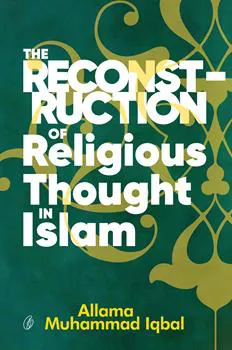
The Reconstruction Of Religious Thought In Islam
₨ 500
Allama Muhammad Iqbal (1877-1938) conceived The Reconstruction of Religious Thought in Islam at a time when the world was in speedy transition. It was literally being restructured in light of new ideas made available by modern scientific and philosophical knowledge. The religious experience was also at the crossroads of history. A good deal of believers were tiptoeing onto the roads to Agnosticism and Atheism. Iqbal was in the know of the currents of his times. Giving due importance to the Islamic philosophical traditions, he was able to reconstruct Islamic religious thought which was also in line with modern science and philosophy. It was a monumental feat indeed. Not only did it help the Muslim mind of the day but also set the direction for further enquiry into the field. Ever since, it has been a major influence on Islamic religious thought around the world.